The SUPPORTER project aims to foster gender-related, sustainable, and transformative institutional changes in sports higher education institutions paying specific attention to the challenge of gender-based violence and leading to the development of inclusive, innovative, intersectional and impactful gender equality plans (4I-GEPs).
The transformation of existing institutional GEPs into 4I-GEPs is achieved through the co-design and implementation of individual roadmaps, tailored to the needs of each implementing organisation.
A roadmap is a detailed document that sets the steps and actions (a.k.a grounding actions) necessary to achieve institutional changes into a common strategic framework and timeframe and has the key features of being flexible and progressive. In the context of SUPPORTER, a roadmap provides a clear and detailed plan of grounding actions that will foster the institutional changes needed to pave the way for the development of the 4I-GEP.
SUPPORTER roadmaps
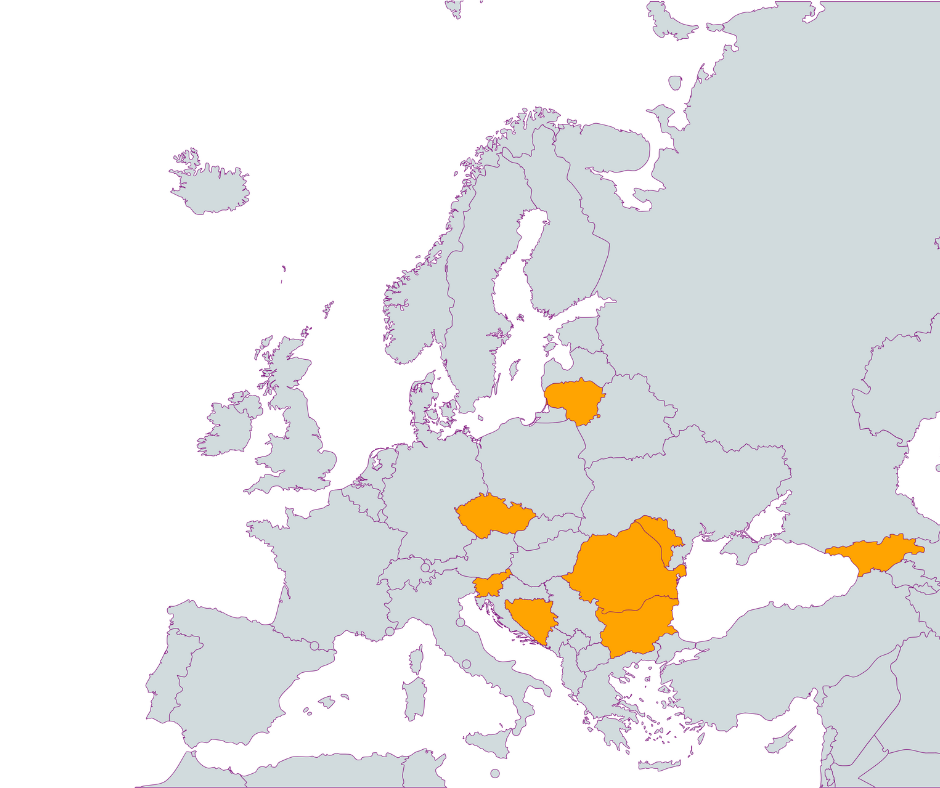
- 8 sports higher education institutions
- Located in Central and Eastern Europe
- Supported by 3 expert partners
- 8 roadmaps towards 4I-GEPs including:
- A set of Grounding Actions (GAs)
- Identified critical challenges and measures to effectively address them.
Explore their roadmaps on this interactive map -->

Explore the roadmaps by
Thematic area
Explore the common grounding actions across all institutions
Institution
Get an overview of each institution and its grounding actions
Methodology
Learn about the steps to develop institutional roadmaps.
Thematic areas
The Grounding Actions outlined in the institutional roadmaps are intricately designed to respond to the identified gaps, fine-tuned to the specific context of the IOs. Despite the varied institutional contexts among the implementing organisations, a set of recurrent themes have emerged across the roadmaps:

Building fundamental knowledge on gender+ equality, particularly in sports
To promote a harmonised institutional understanding of gender equality, a standard awareness-raising Grounding Action focused on the clarification of gender+ equality and inequalities within the sports environment has been integrated into all the roadmaps as an initial action.
UNIBL - Raising awareness on gender equality in sports environments
Details: awareness-raising activities on gender equality and understanding of gender issues, stereotypes and biases among staff, students and external stakeholders in the academic sport environment.
GEP elements: Mandatory: Training and awareness-raising
Thematic: Work-life balance and organisational culture; Gender balance in leadership and decision-making
Implementation plan:
- Select the presentation topics and design of the panel discussion
- Set up external panellist members
- Develop a pre/post workshop/panel discussion questionnaire
- Organise a workshop/panel discussion event (students/staff)
CU - Raising awareness on gender equality and inequalities
Details: Activities to raise awareness about gender equality, gender issues, gender stereotypes and biases in the academic sports environment.
GEP elements: Awareness-raising; Organisational culture
Implementation plan:
- Set up a working team and allocate tasks
- Develop the scheme (Define objectives, target audience, timeframe and budget, activities and desired outcome)
- Design the material (define appropriate channels, create the visuals)
- Finalise the material and seek approval
- Implement the activities (Suggested activities: Workshop/panel discussion events for academic/admin staff and students – e.g. for new students during the induction week, 1 local stakeholder event for external stakeholders, 1 social media campaign)
- Evaluate the impact and prepare suggestions for future relaunch
NSA – Raising awareness on gender+ equality and inequalities in sports' environments
Details: Raising awareness activities on gender equality, gender issues, gender stereotypes and biases in the sports environment.
GEP element: Awareness-raising
Implementation plan:
- Set up a working team and allocate tasks
- develop the scheme (Define objectives, target audience, timeframe and budget, activities and desired outcome)
- design the material (define appropriate channels, create the visuals)
- Finalize the material and seek approval
- Implementing the activities. These may include: Social media campaigns for commemorating international days associated with gender equality, such as International Women's Day, through the organisation of special events that emphasise the significance of gender inclusivity in the sports arena; Targeted campus events for academic/admin staff and students, one local stakeholder event for external stakeholders)
- Evaluate impact and suggestions for future relaunch
UVT - Raising awareness on gender+ equality in sports environment
Details: A series of awareness-raising activities on gender biases and stereotypes in the sports environments and the role of GEP in addressing these inequalities.
GEP elements: Awareness-raising, GBV
Implementation plan:
- Set up a working team
- develop the awareness-raising plan (defining the objectives, target audience, timeframe and budget, a detailed plan of the activities and the desired outcome)
- Design of the awareness-raising material, including the creation of relevant content and visuals for all the dissemination material
- Implementation of the activities, such as a) one info-day for students and staff to discuss basic concepts regarding gender equality, highlighting the role of the GEP and stimulating the interest for participation in the survey. b) A local stakeholder event for external stakeholders, and c) A social media campaign.
- Evaluate the awareness-raising plan’s impact and the possibility of future relaunch
GSTUPES - Raising awareness on gender equality and the role of GEP in the promotion of a gender-inclusive culture
Details: An awareness-raising campaign, consisting of various activities to increase understanding of the basic concepts of gender equality and the importance of GEP as an integral tool in promoting institutional change.
GEP elements: Awareness-raising; Public document; Organisational culture
Implementation plan:
- Set up a working group. Once formed, this group will be responsible for the design and implementation of the campaign.
- Develop the awareness-raising campaign, which includes the following:
-
- Establish the campaign’s objectives
- Define the target audience
- Set the budget
- Outline the campaign’s activities and timeframe.
- Determine the campaign’s outcomes
- Design the campaign’s material
- finalize the campaign and seek approval from the senior management
- Implement the planned activities
- Evaluate the campaign’s impact
SUPES - Raising awareness on gender equality and on the role of GEP in the promotion of a gender-inclusive culture
Details: An awareness-raising campaign, consisting of various activities to increase understanding of the basic concepts of gender equality and the importance of GEP as an integral tool in promoting institutional change.
GEP elements: Awareness-raising; Public document; Organisational culture
Implementation plan:
- Set up a working group. Once formed, this group will be responsible for the design and implementation of the campaign.
- Develop the awareness-raising campaign, which includes the following:
-
- Establish the campaign’s objectives
- Define the target audience
- Set the budget
- Outline the campaign’s activities and timeframe.
- Determine the campaign’s outcomes
- Design the campaign’s material
- finalize the campaign and seek approval from the senior management
- Implement the planned activities
- Evaluate the campaign’s impact

Focus on gender-based violence
As gender-based violence is a core focus of the project, a second cross-cutting Grounding Action in all roadmaps emphasises awareness-raising on gender-based violence and sexual harassment in sports.
UNIBL - Sharing knowledge on GBV and sexual harassment in sports environment
Details: The GA aims to increase students' and Faculty staff's knowledge on how to recognise and act upon gender-based violence and sexual harassment in sports environments and in general.
GEP elements: Mandatory: Training
Thematic: Measures against gender-based violence, including sexual harassment
Implementation plan:
- Select experts to promote the Guidelines and raise awareness activities
- Promote the Guidelines for the prevention of GBV and SH and the raising awareness workshop
UL - Raising awareness on gender + inequalities in sports environment and communicating the content, objectives and progress of the GEP and awareness-raising initiatives on Gender-Based Violence
Details: Develop an internal (for faculty staff and students) and external (for external stakeholders) communication campaign.
GEP elements: Mandatory: Public document and Awareness-raising
Implementation plan:
- Communication campaign:
- Develop a communication campaign scheme.
- Design the campaign.
- Launch the campaign.
- Organise informational sessions and workshops for faculty staff and students:
- Organise sessions and workshops to introduce the content of GEP to the faculty members, staff and students
- Provide an overview of the objectives, key components and importance of the GEP in promoting gender equality within the faculty.
- Encourage participants to express their opinions and concerns (‘sticker’ workshop) and provide information about gender diversity at the faculty.
- Organise two local events to showcase the benefits of GEP in the making.
- Develop an online platform with GEP-related documents:
- Create a dedicated section on the faculty website or intranet portal where individuals can access GEP-related documents, resources, and updates.
- participate in events related to sports higher education institutions (at least three events).
CU- Awareness-raising on GBV at the institutional level and beyond
Details: This activity will address the presented gaps in order to increase understanding among staff and students regarding the concept and forms of gender-based violence (physical, sexual, psychological, economic and financial, sexual harassment, online) in the sports context This will assist in creating To create a safe environment and a culture of respect and equality. Also, staff and students will be introduced to the relevant regulatory framework and internal procedures in place (reporting and case management, support mechanisms) in a simple and comprehensive manner.
GEP element Mandatory: Training
Thematic: Measures against gender-based violence including sexual harassment
Implementation plan:
-
Launch awareness-raising and educational activities designed to address identified knowledge gaps.
-
Amplify the reach and impact of the messages being communicated, ensuring that the importance of the Gender Equality Plan (GEP) is recognized at all levels of the faculty.
-
Engage Vice-deans and contact persons in participating in various gender equality-oriented events, such as “Women Who Inspire” on March 8th, the new EqualEdu project, and the LERU-CE7 international workshop "Inclusive GEPs in FPE10" on March 14th and 15th. Utilize these events to disseminate information and foster an environment that promotes gender equality.
-
Organize a local stakeholder event, such as an awareness day, to raise awareness among targeted external stakeholders including sports clubs, trainers, associations, umbrella organizations, and public authorities.
NSA - Raising awareness on GBV and sexual harassment in sports environment with internal and external stakeholders
Details: Develop and implement awareness-raising activities on GBV and sexual harassment in sports environments and promote existing achievements from the university level, but also at the local level by raising the awareness of external stakeholders.
GEP element: Mandatory: Training
Thematic: Measures against gender-based violence, including sexual harassment
Implementation plan:
- Set up the working team
- Develop a comprehensive scheme (Define objectives and message, target audience, timeframe and budget, outline the campaign’s activities and desired outcome)
- Design the material for the planned activities (define appropriate channels, create the visuals, prepare the presentations)
- Finalise the scheme and material and seek approval
- Launch the awareness-raising activities. This may include one training event for staff and students and an introduction workshop for freshly enrolled students. It will also include a local stakeholder event (e.g. in the form of an awareness day) to raise awareness of targeted external stakeholders such as sports clubs, trainers, associations, umbrella organisations, and public authorities.
- Evaluate the scheme’s impact and explore the possibility of future relaunch
LSU - Training and capacity-building on GBV and sexual harassment in sports environment for internal and external stakeholders
Details: This activity is designed to carry out training GBV programs, diversity or multiple identities in sport, for the university community and external partners (Sports Federations, Sports clubs, Sports schools, Municipal sports centres, National Olympic Committee).
GEP element Mandatory: Training and awareness-raising
Thematic: Measures against gender-based violence, including sexual harassment
Implementation plan:
Trainings are conducted for the university's target groups (administration, teachers, researchers, students, doctoral students) and social partners.
Training topics could be these:
- GEP, GBV, multiple identities and diversity issues in sports
- Prevention of GBV and creating a safe and supportive environment.
- Harm of stereotypes and discrimination in sports.
- Practical sessions (case study: how to react when witnessing discriminatory behaviour, harassment, or violence).
UVT- Raising awareness on GBV and sexual harassment in sports environment with internal and external stakeholders
Details: This GA develops and implements awareness-raising activities on GBV and sexual harassment in sports environments both at the university and at the local/national level.
GEP element: Mandatory: Training
Thematic: Measures against gender-based violence, including sexual harassment
Implementation plan:
- Set up the working team
- Develop a comprehensive scheme (Define objectives and message, target audience, timeframe and budget, outline the campaign’s activities and desired outcome)
- Design the material for the planned activities (define appropriate channels, create the visuals, prepare the presentations)
- Finalise the scheme and material and seek approval
- Launch the awareness-raising activities. This may include one training event for staff and students and an introduction workshop for freshly enrolled students. It will also include a local stakeholder event (e.g. in the form of an awareness day) to raise awareness of targeted external stakeholders such as sports clubs, trainers, associations, umbrella organisations, and public authorities.
- Evaluate the scheme’s impact and explore the possibility of future relaunch
GSTUPES - Raising awareness on GBV and sexual harassment in sports environment with internal and external stakeholders
Details: This grounding action develops and implements awareness-raising activities on GBV and sexual harassment in sports environments both at the university and at the local/national level.
GEP element: Mandatory: Training and awareness-raising
Thematic: Measures against gender-based violence, including sexual harassment
Implementation plan:
- Set up the working team
- Develop a comprehensive scheme (Define objectives and message, target audience, timeframe and budget, outline the campaign’s activities and desired outcome)
- Design the material for the planned activities (define appropriate channels, create the visuals, prepare the presentations)
- Launch the awareness-raising activities. This includes: a) 1 workshop organised for staff, b) 1 workshop organised for students and c) 1 local stakeholder event to raise awareness of targeted external stakeholders such as sports clubs, trainers, associations, umbrella organisations, and public authorities.
- Evaluate the scheme’s impact and explore the possibility of future relaunch
SUPES - Raising awareness on GBV and sexual harassment in sports environment with internal and external stakeholders
Details: This GA focuses on fostering a better understanding of gender issues, stereotypes and biases in the academic sport environment through a set of awareness-raising activities.
GEP elements: Awareness-raising; GBV
Implementation plan:
- Set up a working group for this GA. Once formed, this group will be responsible for the design and implementation of the campaign.
- Develop the awareness-raising campaign, which includes the following:
- Establish the campaign’s objectives
- Set the budget
- Outline the campaign’s activities and timeframe
- Determine the campaign’s outcomes, including the definition of clear and achievable results and indicators and tools to achieve them
- Design the campaign’s material, including the preparation of the campaign’s material
- Finalize the campaign and seek approval from the senior management
- Implement the planned activities
- Evaluate the campaign’s impact

Dedicating resources on the promotion of gender equality
All organisations are committed to dedicating or increasing institutional resources for gender equality through various actions.
NSA - Building a Communication & Networking Policy
Objective: Building an effective communication policy and channels that cover the various dimensions of gender+ equality. Identification of external stakeholders at governmental, local and other university levels. Exchange of information and good practices. To create a dynamic and supportive ecosystem where everyone is actively involved in advancing gender equality, contributing to a workplace and academic environment that is equitable, inclusive, and respectful of diverse personalities and identities.
GEP element: Mandatory: Dedicated resources; Training and awareness-raising
Thematic: Work-life balance and organisational culture
Implementation plan:
- Identify key internal stakeholders, including students, faculty, administrative staff, and alumni, as well as external stakeholders.
- Define the communication strategy objectives, tools, and task allocation.
- Develop the communication strategy
- Seek approval for the finalized communication strategy (if necessary).
LSU - Organising a campaign to encourage participation and leadership in sport
Objective: Raise awareness about pervasive gender stereotypes, empower women, shift cultural perceptions and create a more equitable and inclusive sporting environment.
GEP element: Training and awareness-raising
Implementation plan:
- Set up a team for the campaign
- Define campaign objectives, content, timeframe, budget
- Create the campaign design
- Prepare the interviews with success stories (4-5) of professional athletes
- Develop the campaign materials
- Launch of campaign
- Campaign monitoring
UVT - Creating a communication and dissemination strategy
Details: This GA builds an effective communication policy and channels that covers the various dimensions of gender+ equality and focus on external stakeholder engagement.
GEP elements: Dedicated resources; Training and awareness-raising
Implementation plan:
- Set up the working team and clearly alloallocatecating tasks for building the communication strategy
- Define the communication strategy objectives, tools and key internal and external stakeholders
- Develop the communication strategy, including the establishment of regular channels to update stakeholders on GEP progress and initiatives related to gender+ equality.
- Seek approval for the finalised communication strategy
- Development of an InfoPoint at the Faculty of Physical Education and Sport to serve as a repository for all the information related to gender+ equality. (All information regarding the project’s ongoing and upcoming actions and results will also be communicated via the InfoPoint)
GSTUPES - Development of a communication strategy for external stakeholder engagement
Details: This GA builds an effective communication strategy and channels that covers the various dimensions of gender+ equality and focuses on external stakeholder engagement at local, national and international levels.
GEP elements: Dedicated resources; Training and awareness-raising
Implementation plan:
- Set up the working group. Besides the SUPPORTER project team, the Communications Department will be largely involved in this action and allocate tasks for building the communication strategy and the design of the awareness-raising plan
- Define the communication strategy for short-term and long-term goals, tools and target audiences (internal and external stakeholders). This stage also identifies the existing communication channels and explores their effectiveness in pursuing the defined goals.
- Development of the communication strategy, indicatively including the capitalisation of existing and the establishment of new channels (such as email exchanges, university events, seminars, and departmental meetings) and the creation of a toolkit with communication and dissemination material.
- Seek approval for the finalised communication strategy (if necessary)
- As part of the communication strategy, create an InfoPoint within the University’s website to serve as a repository for all resources and activities related to gender equality (e.g. GEP and related policies, legal and institutional framework, SUPPORTER activities and outcomes).
SUPES - Development of a communication strategy for external stakeholder engagement
Details: This GA builds an effective communication strategy and channels that covers the various dimensions of gender+ equality and focuses on external stakeholder engagement at local, national and international levels.
GEP elements: Dedicated resources; Training and awareness-raising
Implementation plan:
- Set up the working group. Besides the SUPPORTER project team, the Communications Department will be largely involved in this action and allocate tasks for building the communication strategy and the design of the awareness-raising plan
- Define the communication strategy for short-term and long-term goals, tools and target audiences (internal and external stakeholders). This stage also identifies the existing communication channels and explores their effectiveness in pursuing the defined goals.
- Development of the communication strategy, indicatively including the capitalisation of existing and the establishment of new channels (such as email exchanges, university events, seminars, and departmental meetings) and the creation of a toolkit with communication and dissemination material.
- Seek approval for the finalised communication strategy (if necessary)
- As part of the communication strategy, create an InfoPoint within the University’s website to serve as a repository for all resources and activities related to gender equality (e.g. GEP and related policies, legal and institutional framework, SUPPORTER activities and outcomes).

Increasing data collection on gender, including an intersectional approach
Most organisations have incorporated a Grounding Action on data collection, differing in the methods, tools, and types of data to be gathered.
UL - Analysis of gender balance at Faculty of Sport and establishing mechanism for collecting data
Details: This GA aims to conduct a comprehensive analysis of gender distribution within the organization. It will also assess the composition of leadership and committees. Additionally, the GA will involve systematic data collection on gender-based incidents. It also aims to conduct analysis of results and report preparation
GEP elements: Mandatory: Data collection and monitoring.
Implementation plan:
Analysis of gender distribution:
-
- To obtain existing data on gender diversity in various study programs (students), administrative staff, researchers, and pedagogical staff. Focus on methods, competent body and frequency of the existing gender audit mechanisms.
- To analyse the data to determine the gender balance across different roles within the faculty.
- Identify what data is not being collected and suggest enrichment of the data collection and analysis process with new areas to be monitored.
- Leadership and committee composition analysis:
-
- Review organisational charts and committee membership to assess gender representation in leadership positions and decision-making bodies.
- Identify any gender disparities in leadership roles and committee memberships.
- Data collection on gender-based incidents:
-
- To track the number of reported incidents of sexual violence, harassment, or discrimination over a specific period (last 3 years).
- Document the nature of each incident and the actions taken in response.
- Analysis of results and report preparation:
-
- Prepare a report summarising the findings on gender equality in the Faculty
- Plan further steps to improve gender diversity and awareness of the GEP.
CU - Gathering information on GBV and sexual harassment
Details: Collection of data on the current state of knowledge regarding GBV at the faculty level.
GEP elements: Mandatory: Data collection and monitoring.
Thematic: Measures against gender-based violence including sexual harassment.
Implementation plan:
- Use the results of a university-wide questionnaire that has been previously distributed to leverage existing data on the perceptions and awareness of GBV and sexual harassment across the university.
- Analyse the data found to have a foundational understanding that can guide further inquiries and actions. The results will also indicate whether any GBV-related data is missing and recommendations for enhancing the existing questionnaire or introducing additional data collection methods will be issued.
NSA - Needs Assessment and Analysis
Details: Analysing the current situation and drawing up proposals for optimising the existing legal and institutional framework and units.
GEP elements: Mandatory: Data collection and monitoring
Implementation plan:
- Identify the responsible organisers for the implementation of the activity
- Identify suitable methods to collect and analyse data
- Develop data collection tools (i.e. interview/focus group guide, questionnaires etc.)
- Inform the units of the organisation about the existence of a gender focus in the institutional vision, and the need to generate and analyse information.
- Conduct the data collection procedures
- Analyse the information generated and identify areas of priority to focus on in the updated 4I-GEP
NSA - Creating a gender equality database
Details: Based on the results of GA 4, this action creates a database to make the gender audit and gender-related information publicly available and easily accessible to all units in the institutional structure.
GEP element Mandatory: Data collection and monitoring
Implementation plan:
- Set up a working team and allocate creative, operational, and content-related tasks on the gender database
- Define the purpose, content, and format of the database.
- Comply with a review of existing sex-disaggregated data, relevant national legal and policy documents, and the organisation’s strategic and operational documents.
- Design the database for information on gender+ equality at the institutional level, which will be visually captivating, user-friendly, and institutionally available
- Add content and test the database (functionality, interface, purpose-serving)
- Launch the database and dissemination
LSU– To improve and conduct a regular survey to assess the effectiveness of initiatives in reducing gender-based violence and promoting a safe and respectful environment.
Details: This activity is intended for the improvement of the survey aimed at assessing the effectiveness of initiatives in reducing gender-based violence and promoting a safe and respectful environment. The survey will be supplemented with relevant questions. It will help the university to better understand the psychological well-being of students and staff, especially considering issues of gender equality and gender-based violence. The survey will be supplemented with relevant questions.
GEP element: Mandatory: Data collection and monitoring
Thematic: Measures against gender-based violence, including sexual harassment
Implementation plan
- Develop questions related to the topics of gender equality and gender-based violence with the psychological well-being committee and stakeholders.
- Add these questions to the existing questionnaire.
- Conduct a pilot study.
- Analyze the results of the pilot study.
- Delete and/or correct inappropriate questions.
- Survey university employees and students.
- Analyze and present the survey results to the university community.
- Provide recommendations to the university on how to improve psychological well-being, strengthen gender equality, and reduce cases of gender-based violence.
UVT - Establishing a gender audit mechanism and mapping knowledge on selected GEP elements
Details: This activity aims to: Identify the problems within the institution regarding gender equality, and the level of awareness of the academic and research staff regarding the GEP and GBV principles and issues. It also provides an overview of the problems that could affect social relations and the work environment through the misunderstanding or defective application of some principles related to gender equality.
GEP elements: Mandatory: Data collection and monitoring; Dedicated resources
Thematic: Measures against gender-based violence, including sexual harassment; Gender balance in leadership and decision-making
Implementation plan:
- Create a working team and assign roles to capitalise on relevant expertise and avoid confusion in task implementation. Members of the Communication Department may join to assist with the creation of tools for the recruitment of participants.
- Create the survey quiz form
- Collect data from the electronic platform that automatically ensures data collection and subsequent data analysis and processing
- analyse the data using the quantitative methods identified during the development of the methodology
- Elaborate the scientific report based on the analysed data
- Disseminate the project's results
GSTUPES - Establishing a gender audit and monitoring mechanism
Details: This Grounding Action aims to create a gender audit and monitoring system and pilot the new data collection processes in a selected area of priority.
GEP elements: Mandatory: Data collection and monitoring
Thematic: Gender balance in leadership and decision-making; Gender equality in recruitment and career progression
Implementation plan:
- Create a working group and assign roles to capitalise on relevant expertise and avoid confusion in task implementation.
- Review and analysis of existing datasets at the University to map what is already being collected. Focus is placed on methods, competent body and frequency of the gender audit. Identification of gender data gaps.
- Define suitable data collection and analysis methods and responsible institutional body. Selection of a suitable repository tool and defining the frequency of progress monitoring. Identification of criteria for the recruitment of participants
- Develop tools for data collection on the two selected thematic areas, making sure to incorporate intersectional and sports-sensitive aspects. Both quantitative (e.g. statistical information and questionnaire) and qualitative (e.g. focus groups, interview) methods will be used and different target groups will be identified. External consultation may be needed at this stage.
- Carry out a pilot round of the defined data collection processes (e.g. survey and focus group) on this specific thematic area.
- Analyse the collected data and report on findings.
- Reflect upon the efficiency of the selected tools and refinement for future use.
SUPES - Establishing a gender audit and monitoring mechanism
Details: This Grounding Action aims to create a gender audit and monitoring system and pilot the new data collection processes in a selected area of priority.
GEP elements: Mandatory: Data collection and monitoring
Thematic: Gender balance in leadership and decision-making; Gender equality in recruitment and career progression
Implementation plan:
- Create a working group and assign roles to capitalise on relevant expertise and avoid confusion in task implementation.
- Review and analysis of existing datasets at the University to map what is already being collected. Focus is placed on methods, competent body and frequency of the gender audit. Identification of gender data gaps.
- Define suitable data collection and analysis methods and responsible institutional body. Selection of a suitable repository tool and defining the frequency of progress monitoring. Identification of criteria for the recruitment of participants
- Develop tools for data collection on the two selected thematic areas, making sure to incorporate intersectional and sports-sensitive aspects. Both quantitative (e.g. statistical information and questionnaire) and qualitative (e.g. focus groups, interview) methods will be used and different target groups will be identified. External consultation may be needed at this stage.
- Carry out a pilot round of the defined data collection processes (e.g. survey and focus group) on this specific thematic area.
- Analyse the collected data and report on findings.
- Reflect upon the efficiency of the selected tools and refinement for future use.

Embedding gender in research and education
Gender in research and education also emerged as a significant theme among the implementing organisations.
UNIBL - Organising training on embedding the gender dimension into research and teaching content
Details: Training activities on embedding gender dimension into research and teaching content in sports studies at the Faculty through organising workshops and supporting the development of research projects with integrated gender dimension.
GEP elements: Mandatory: Training and awareness-raising
Thematic: Integration of the gender dimension into research and teaching content
Implementation plan:
- Establish a proactive network (Supporter member team/staff/students) for embedding gender dimension into presentations, seminars, diploma or master thesis
- Create the teaching content of the workshop and select the methodology of the workshop
- Develop a pre/post-workshop questionnaire
- Oganise workshops (one for staff and one for students)
UL - Encouraging of Gender Equality in the distribution of research resources
Objectives: This activity aims to address gender balance in the distribution of research resources and participation in projects. It also focuses on encouraging research projects to be led by younger women and promoting the creation of gender-balanced research teams.
GEP elements: Integration of gender dimension into research and teaching content
Implementation plan:
- Collect data on current projects and resources.
-
- Analysis of the current situation - overview of gender representation in ongoing research projects.
- Gender balance in the distribution of research resources.
-
- project gender balance from the start of the project's application process.
- Presentations of benefits of gender equality at the academic assembly.
- Conversations with research project leaders.
- Gender balance in participation in projects.
-
- Promoting gender balance from the start of the project's application process.
- Presentations of benefits of gender equality at the academic assembly.
- Conversations with research project leaders.
- Encouraging research projects to be led by younger women and promoting the creation of gender-balanced research teams.
-
- Promoting gender balance from the start of the project's application process.
- Conversations with younger researchers.
CU- Forming educational modules and material for staff and students on gender, sexuality and intersectionality
Details: This activity aims to improve the general knowledge of gender, sexuality and intersectionality by enriching existing courses with gender-sensitive topics and encouraging greater participation of students within and beyond the faculty of physical education and sport.
GEP elements: Mandatory: Training
Thematic: Integrating the gender dimension into research and teaching content
Implementation plan:
- Integrate gender-sensitive elements into the teaching of an existing Research methodology course for doctoral students.
- Enrich the subjects "Academic Writing” (focused on work with publication activity/results of scientific work) and “Violence, Individual, and Society" courses for undergraduates with gender dimension discussions, managed by Undergraduate Program Coordinators and course instructors.
- Initiate the co-creation and wide distribution of educational materials, specifically brochures and information leaflets focusing on gender, sexuality, and intersectionality. Disseminate these materials to both staff and students, extending from the university level down to our faculty, ensuring a broad reach and impact.
- Promote and motivate students to enrol in relevant subjects. Include courses offered within our faculty and those available in other faculties, covering lectures and seminars on gender, sexuality, and intersectionality.
NSA - Integrating gender in the curriculum
Details: Conducting exercises and lectures with 1st and 4th-year students at the National Academy of Sports in the Philosophy of Sports and Sociology of Sports classes based on the results of the project
GEP elements: Thematic: Integration of gender dimension in the research and teaching content
Implementation plan:
- Review the curriculum and identify gender-related topics in existing modules and gaps
- Define sports-specific contents that address gender-related issues, including historical inequalities, opportunities, and challenges in each sport. Each sport module should entail references to gender equality and persistent stereotypes.
- Incorporate case studies that highlight the achievements and challenges faced by athletes of both genders in various sports.
- Finalise the new curriculum and submit for approval
- Communicate the integration of the gender dimension in academic teaching.
LSU - Encouraging research initiatives that explore the intersection of gender and sports
Details: The aim is to encourage students (bachelor, master) to conduct more, broader and more detailed research related to gender equality in sports and gender-based violence in sports.
GEP elements: Thematic: Integration of the gender dimension into research and teaching content
Implementation plan:
- The Head of the Department of Physical and Social Education will suggest competent teachers to submit an expanded list of bachelor's and master's theses topics related to the problems of gender equality and gender-based violence in sports.
- After analysing existing research, competent teachers will provide students with possible topics or students can suggest topics related to the mentioned problems. It is also possible to submit requests to external partners (sports centres, sports clubs) about research related to gender equality and gender-based violence that would be of interest to them.
- Encourage students to present topics relevant to them themselves.
LSU – Develop and implement a series of awareness-raising activities on gender+ and equality in the sports environment at the institutional level. Introduce innovative teaching methods and materials that challenge gender stereotypes, and gender-based violence and promote diverse role models in sports.
Details: This Grounding Action develops and implements a series of awareness-raising activities on gender+ equality in the sports environment at the institutional level.
GEP element Mandatory: Training and awareness-raising
Thematic: Integration of the gender dimension into research and teaching content
Implementation plan
Include the following topics in the module:
- Gender stereotypes related to sports. By providing various examples of inappropriate behaviour found in sports and discussing the reasons for this.
- The principle of equal opportunities. Emphasising that all athletes have equal opportunities to participate in any sport and any level of sports events, regardless of gender.
- Gender-based violence, including sexual harassment in sports
Include innovative methods in the module:
- Use various examples of sports. Students could present the stories of different athletes, regardless of their gender.
- Use technology, thereby encouraging students to engage in active learning processes. It is possible to create interactive training programs that reflect various sports activities. Encourage students to create their own recordings, videos or projects that highlight diversity and equality in sport.
- Include case studies. For example, invite coaches to share their experiences of how they have promoted diversity and equity in their training.
- Discussion and reflection. Organise group discussions about gender stereotypes in sports and how they can be overcome. To encourage students to reflect on their experiences in sports and how they can contribute to the promotion of equal opportunities.
Workshop/panel discussion for students regarding awareness-raising activities on gender+ equality in the sports environment.
- Design the material (define appropriate channels, create the visuals)
- Impact evaluation
UVT – Proposing inclusive actions within the teaching curriculum for practical/ sports activities towards gender+ equality
Details: Encourage a productive dialogue among academic and research staff members to agree on the GE principles and concepts that have to be incorporated into the teaching scheme. This will lead to proposed amendments to the existing curriculum.
GEP element: Mandatory: Training and awareness-raising; Dedicated resources
Thematic: Integrating the gender dimension into the teaching content
Implementation plan:
- Create the auto-evaluation assessment form
- Prepare a focus group discussion with the academic staff to explore: a) identification of GE differences, b) coping strategies applied during the teaching activity, c) topics and methods that need to be incorporated in the curriculum, d) the possibility of making amendments to existing modules
- Discuss with the previous students to gather their views on whether and how the curriculum would benefit from a gendered perspective
- Carry out focus group discussions with academic staff
- Analyse the collected data
- Report with results and recommendations for curriculum updates

Promoting work-life balance and organisational culture through interconnected priorities
Although few relevant gaps were explicitly identified, this element underpins several Grounding Actions. While only one action focuses exclusively on guidelines for a seamless return from career breaks, the theme features in some of the roadmaps as intricately woven into actions across other areas, such as those promoting the use of gender-sensitive language alongside recruitment and career progression or those aiming to debunk gender stereotypes.
UNIBL - Developing of a Guidelines for Provision of support during and after the career break
Details: The main goal of this action is to ensure that all staff, and in particular academic staff, has sufficient support during and after career breaks such as long-term illness, parental leave, care duties that prevent them from actively engaging for longer periods (more than 15 days), etc.
GEP elements: Mandatory: Dedicated resources
Thematic: Work-life balance and organisational culture
Implementation plan:
- Establish a team for the development of Guidelines
- Draft the Guidelines,
- Discuss the Guidelines with the staff and receiving feedback,
- Adoption of the Guidelines by the Faculty management.
NSA – Use of inclusive language in institutional documents
Details: Promoting inclusivity by revising documents, including academic policies, handbooks, and communication materials, to ensure that language is inclusive and embraces diversity. This promotes a sense of belonging for individuals of both genders within the sports university community.
GEP element: Thematic: Work-life balance and organisational culture
Implementation plan:
- Collect and identify institutional documents and policies which are going to be reviewed
- Review and update existing institutional documents and policies to ensure they align with gender equality principles.
- Develop guidelines on inclusive language use that respects diverse identities in relation to the Bulgarian national policy and gender equality principles.
- Encourage the use of inclusive language in all university communications, documentation, and official forms.

Top of the page
An overview of the eight institutional roadmaps' grounding actions
University of Banja Luka, Faculty of Physical Education and Sport (UNIBL) - Bosnia & Herzegovina
The University of Banja Luka is the largest in the Republic of Srpska. UNIBL consists of 18 organisational units and one of them is the Faculty of Physical Education and Sport. Studies at the Faculty are organised at two levels (bachelor and master) in sports science and physical education and sports.
GEP at the University of Banja Luka (UNIBL) has been signed by the Rector of the University and adopted by the Senate. It is a public document available in the local language and English language version published on the website of the UNIBL.
Overall aim: To build up a gender-supportive and zero-tolerance towards GBV environment in the sports context.
Objectives:
- Raise awareness and understanding of gender issues, stereotypes and biases in the sport environment
- Increase awareness of gender-based violence, including sexual harassment among staff and students
- Ensure sustainability of actions by setting measurable goals and tracking progress, assessing the impact of gender equality initiatives at the Faculty.
GA1 – Raising awareness on gender equality in sports environments
GA2 – Development of the Guidelines for Provision of support during and after the career break
GA3 – Training on embedding gender dimension into research and teaching content
GA4 – Establishing a support system at the Faculty level
GA5 – Sharing knowledge on GBV and sexual harassment in sports environment
University of Ljubljana, Faculty of sport (UL) - Slovenia
The University of Ljubljana, Faculty of Sport, located in Ljubljana, Slovenia is one of the 26 members of the University of Ljubljana. It specialises in academic programs and research in sports science, kinesiology, and physical education, offering undergraduate, postgraduate, and doctoral programs.
The Gender Equality Plan (GEP) at the University of Ljubljana, is currently not signed, but it has been formally adopted at the University of Ljubljana level. Details about the plan, including information about signatories, can be found on the official website of the university: Enakost_spolov_nacrt_enakosti_spolov_UL_2022_2027.pdf (uni-lj.si)
Overall aim: to provide a working and learning environment that is sensitive to gender and other discrimination or bias, such as unjustified distinctions based on physical disability, gender identity, sexual orientation, age, religion, social status or other characteristics that may result in employees and students being treated less favourably and therefore having less opportunity to succeed and participate in all processes at faculty.
Objectives:
- Knowledge of the situation.
- Adaptation of GEP UL to the needs of the faculty.
- Promotion of GEP measures.
These objectives will be achieved through the following grounding actions:
GA1 – Analysis of gender balance at Faculty of Sport and establishing mechanism for collecting data
GA2 – Raising awareness on gender + inequalities in sports environment and communicating the content, objectives and progress of the GEP + awareness-raising initiatives on Gender-Based Violence
GA3 – Development of the Confidential Help System
GA4 – Encouragement of Gender Equality in the distribution of research resources
GA5 – Use of gender-sensitive language
Charles University (CU) - Czechia
Charles University is the best-rated Czech university according to international rankings, with around 100,000 students. The mission of the Faculty of Physical Education & Sport is to educate/ train professionals in sport / physical education, military physical education, civil protection education, sport management, recreation and physiotherapy.
CU GEP has been published on the official website (Czech and English versions) of Charles University in the “Gender Equality” section. It does not include a signature, only a responsible person – a Member of Rector’s board for Social affairs and Sustainable Development.
The overall aim: To foster a culture of gender equality and inclusivity within the realm of sports education. Through targeted actions and initiatives, CU seeks to promote a sport-centred approach that addresses gender disparities, combats gender-based violence (GBV) including sexual harassment, and embraces inclusiveness, impact, innovation, and intersectionality.
Objectives:
- Adopting a Sport-Centred Approach
- Addressing Gender-Based Violence:
- Considering Inclusiveness, Impact, Innovation, and Intersectionality
These objectives will be achieved through the following grounding actions
GA1 – Raising awareness on gender+ equality and inequalities in sports environments
GA2 – Forming educational modules and material for staff and students on gender, sexuality and intersectionality
GA3 – Training activities on how gender impacts sports research
GA4 – Gathering information on GBV and sexual harassment
GA5 – Awareness-raising on GBV at the institutional level and beyond
GA6 – Redefining the contact persons job description for GEP implementation
National Sports Academy (NSA) - Bulgaria
The National Sports Academy "Vassil Levski" is a specialized higher education institution in the field of sports and sports-related qualifications with around 10,000 students. It offers study programs for Bachelor, Master and PhD degrees covering the main areas of sports education and research.
NSA rules regarding GEP were accepted by the Rectors board on the 5th of September 2022. The act is registered in the written protocol from the Rectors board meeting. It is communicated through the official institutional website and is available at: https://www.nsa.bg/bg/page,1632
The overall aim: to ensure systematicity, consistency and sustainability of the actions of the National Sports Academy to maintain and develop gender balance in the overall environment.
The objectives
- Purposeful understanding and definition of sports education as a specific area to ensure equality of women and men, reflecting the conclusions in all areas of education and science
- Providing regular, accurate and accessible information on the observance of gender rights for the purposes of taking relevant regulatory measures combating discrimination
- Creating visibility of the management stance on zero-tolerance concerning any kind of violation of gender equality and fully assisting the reactions to all proven cases of gender-based violence
- Establishing an image of sports academic community where intolerance of gender-based violence and violation of the rights of faculty, staff and students is a core characteristic
- Creation of a permanent and active information environment (training events, self-study, discussions) for developing intolerance of gender-based violence and violation of the rights of faculty, staff and students among the core ethical norms of the academy
- Establishing specific bodies with responsibilities to ensure scientific analyses, measure impact and propose innovative steps in the implementation of the gender balance strategy.
These objectives will be achieved through the following grounding actions:
GA1 – Building a communication & networking policy
GA2 – Raising awareness on gender+ equality and inequalities in sports environments
GA3 – Establishing a commission for implementation of the GEP along with rules for its functioning
GA4 – Needs assessment and analysis
GA5 – Creating a gender equality database
GA6 –Raising awareness on GBV and sexual harassment in sports environment with internal and external stakeholders
GA7 – Use of inclusive language in institutional documents
GA8- Integrating gender in the curriculum
Lietuvos Sporto Universitetas (LSU) - Lithuania
The overall aim: to foster a culture of inclusivity, respect, and equal opportunities, particularly within the context of sports education. Our objectives can be built upon four key areas of focus: inclusiveness, impact, innovation, and intersectionality.
Objectives:
- Organise a Social Campaign to encourage participation and leadership in sport-related activities for all genders.
- Improve and conduct a regular survey to assess the effectiveness of initiatives in reducing gender-based violence and promoting a safe and respectful environment.
- Introduce innovative teaching methods and materials that challenge gender stereotypes, gender-based violence and promote diverse role models in sports.
- Encourage research initiatives that explore the intersection of gender and sports, fostering a culture of continuous learning and improvement.
- Conduct training programs for university staff, teachers, researchers, coaches and athletes to increase awareness of GEP and GBV and intersectionality.
The objectives will be achieved through the following grounding actions:
GA1 –To organise the Social Campaign to encourage participation and leadership in sport-related activities for all genders; such as raising public awareness of choosing a sport based on individual desire rather than stereotypes.
GA2 – To improve and conduct a regular survey to assess the effectiveness of initiatives in reducing gender-based violence and promoting a safe and respectful environment.
GA3 – Introduce innovative teaching methods and materials that challenge gender stereotypes and promote diverse role models in sports.
GA4 –Encourage research initiatives that explore the intersection of gender and sports, fostering a culture of continuous learning and improvement
GA5 –Training and capacity-building on GBV and sexual harassment in sports environment for internal and external stakeholders
Universitatea de Vest din Timișoara (UVT) - Romania
The West University of Timișoara is the largest higher education/research centre in Western Romania with 15,000 students. The Faculty of Physical Education and Sports offers study programmes for the three educational degrees, while research activities are developed within the Research Center for Physical Education, Sport and Kinesitherapy.
UVT Equal Opportunities Policy document has been prepared by the Human Resources and Strategic Management Division and published on the UVT site at the following link.
The overall aim: To create a GEP document that respects the peculiarities of the Physical Education and Sports fields of interest, such as academic and practical education and research, that could complement the general GEP of the UVT.
The objectives:
- Creating the framework for a work environment that stimulates the recruitment of female personnel to create a more gender-balanced scenery, when possible.
- Creating training programmes addressed to young academic staff and researchers to recognise and prevent issues related to gender-based violence
- Creating the framework and tools for monitoring the impact of integrating women in decision-making regarding the specific activities within the fields of sports academic education and research
- Creating a new body tasked with promoting the equality of chances and decision-making for all applicants based on legal credentials and merits
- Establishing the procedures regarding the inclusion, characterization, grading and analysis of different situations to detect and handle incidents of verbal violence or any kind of harassment
- Establishing a set of sanctions according to the gravity of the reported incident
- Establishing rules and punitive measures applicable within all academic activities, especially in disciplines more susceptible to gendered aggression, due to physical interactions between the participants
- Developing collaborations with different sports institutions and departments, public institutions, national Federations, school inspectorates and any other authorities and structures
These objectives will be achieved through the grouding actions below:
GA1 –Establishing a gender audit mechanism and mapping knowledge on selected GEP elements
GA2 – Creating a communication and dissemination strategy
GA3 – Raising awareness on gender+ equality in the sports environment
GA4 – Development of a Protocol for the prevention, assessment and intervention in situations of harassment in the workplace and among students
GA5 – Raising awareness on GBV and sexual harassment in sports environment with internal and external stakeholders
GA6- Proposing inclusive actions within the teaching curriculum for practical/ sports activities towards gender+ equality
The Moldovan State University of Physical Education and Sport (SUPES) - Moldova
The Moldovan State University of Physical Education and Sport is a state higher education institution with
around 2,200 students. The University offers study programmes for the three educational degrees and postdoctoral studies, while research activities are developed within the Scientific Centre.
The GEP of State University of Physical Education and Sport from Republic of Moldova was signed by the Rector, it was published on the website, and it has been communicated with all the faculties.
Overall aim: The GEP sets out and implements the SUPES policy in the long term. Specific policy areas are concretized and given shape in form of a range of activities and projects on the central as well as faculty level.
The objectives:
- To promote an inclusive learning environment through inclusive curricula, lectures and pedagogy
- To promote diversity among staff members in all positions. To promote diversity expertise and inclusive leadership among all staff members.
- To promote diversity of applicants and an inclusive research approach.
- to promote the knowledge and understanding of the various themes that touch on GEP expertise in key roles and facilitate the development of expertise in administrators, staff and teaching staff are important principles for promoting an inclusive learning and working environment.
- To create structures that provide clear frameworks for consciously promoting diversity and inclusion in the form of guidelines, agreements and procedures designed to safeguard diversity and inclusion, and promote positive change.
- Cultural change
The objectives will be achieved through the following grounding actions:
GA1 – Raising awareness on gender equality and the GEP
GA2 – Development of a communication strategy for external stakeholder engagement
GA3 – Setting up a GE Committee at the institutional/faculty level
GA4 – Raising Awareness of gender inequalities in the sports environments
GA5 –Establishing a gender audit and monitoring mechanism
GA6-Establishing Internal Structures and Procedures for GBV Prevention and Treatment within the Institution
GA7- Raising awareness on GBV and sexual harassment in sports environment with internal and external stakeholders
Georgian State Teaching University of Physical Education and Sport (GSTUPES) - Georgia
The overall aim: To cultivate a gender-sensitive culture within the GSTUPES, promoting a zero-tolerance approach towards GBV and reducing persistent gender stereotypes in the sports environment.
Objectives:
- Raise awareness and understanding of gender issues, stereotypes and biases in the sport environment
- Increase awareness of gender-based violence, including sexual harassment among staff and students
- Ensure sustainability of actions by setting measurable goals and tracking progress, assessing the impact of gender equality initiatives at the Faculty.
These objectives will be achieved through the following grounding actions:
GA1 – Raising awareness on gender equality and the GEP
GA2 – Development of a communication strategy for external stakeholder engagement
GA3 – Setting up a GE Committee at the institutional/faculty level
GA4 –Raising Awareness of gender inequalities in the sports environments
GA5 – Establishing a gender audit and monitoring mechanism
GA6- Establishing Internal Structures and Procedures for GBV Prevention and Treatment within the Institution
GA7- Raising awareness on GBV and sexual harassment in sports environment with internal and external stakeholders
The development of the institutional roadmaps
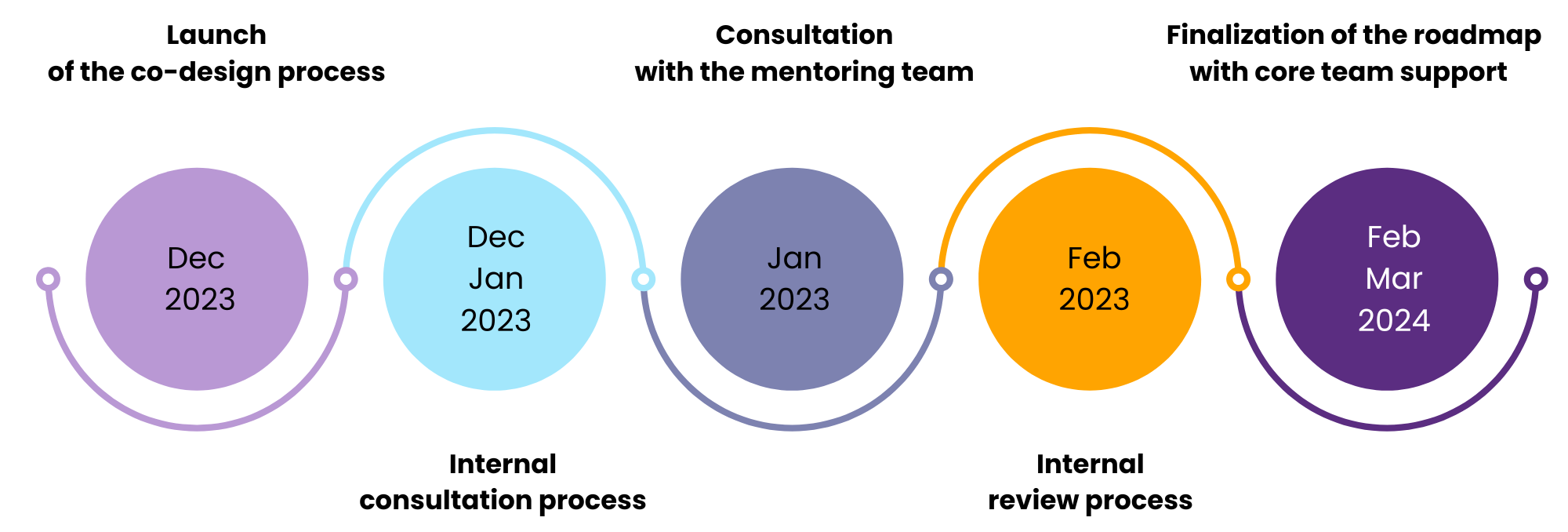
After national and institutional mapping and self-assessment of the existing GEP and institutional policies, the implementing organisations co-designed their roadmap with their internal stakeholders and the support of the SUPPORTER mentoring team from December 2023 to March 2024. The co-design of the institutional roadmaps consisted of five steps: